
How does a horizontal machining center handle heavy-load operations?
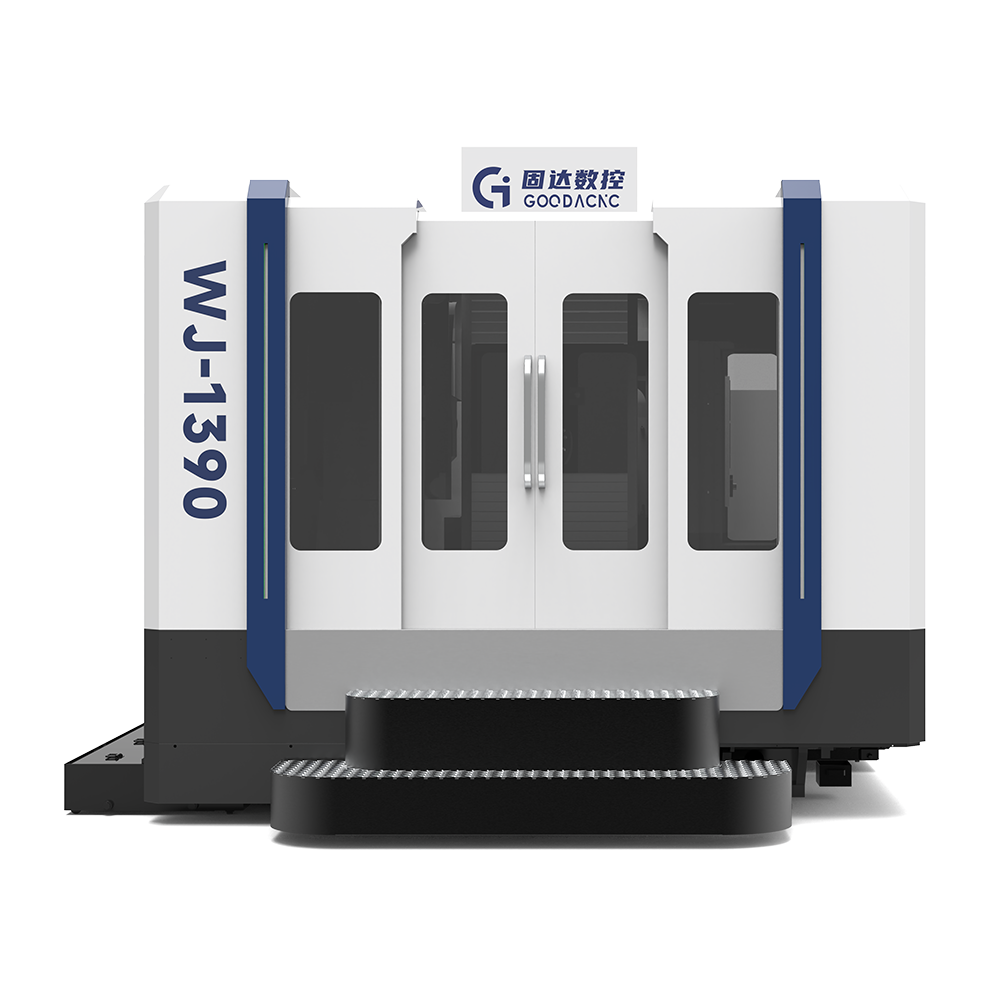
The horizontal machining center achieves heavy-load processing stability through its integral Michelin cast iron bed. This structure typically weighs over 12 tons, with a damping coefficient 30% higher than that of welded structures, effectively absorbing the vibration generated by a cutting force of 15 kilonewtons. When processing an 8-ton Marine diesel engine cylinder block, the worktable load-bearing system adopts hydrostatic guide rail technology, reducing the friction coefficient to 0.0001 and controlling the position deviation within ±0.005 millimeters. According to the production data of Wartsila Group, this design stably maintains the surface roughness value of large workpieces at Ra1.6 microns.
Its core transmission system is equipped with a ball screw with a diameter of 80 millimeters and a servo motor with a preload of 12 kilonewtons, maintaining a twist control of 0.02 millimeters per meter during heavy cutting. Tests conducted by TRUMPF Group of Germany in the manufacturing of mining machinery have shown that when deep slot milling of 45 # steel is carried out, the spindle can maintain a rotational speed of 6,000 revolutions per minute even when the torque reaches 300 Newton-meters, the metal removal rate increases to 450 cubic centimeters per minute, and the tool life is extended by 25%.
 The thermal management system controls the temperature fluctuation generated by continuous processing within ±1 degree Celsius through the 20-degree Celsius constant-temperature oil circulating inside the bed. When Mazak Corporation of Japan was continuously processing 5-ton aerospace frame parts for 72 hours, this technology compressed the precision loss caused by thermal deformation from 0.01 millimeters to 0.002 millimeters. According to the actual measurement data of Airbus' suppliers, the product qualification rate increased from 92% to 99.3%.
The automated integration solution includes a robot loading and unloading system with a load capacity of 3 tons, achieving a repeat positioning accuracy of ±0.1 millimeters through laser calibration. The application case of Sany Heavy Industry's intelligent factory shows that this system has shortened the replacement time of heavy-duty workpieces from 90 minutes to 8 minutes, increased equipment utilization to 85%, reduced labor costs by 60%, and shortened the payback period to 26 months.
For extremely heavy-load working conditions, the intelligent monitoring system equipped in the horizontal machining center collects 2,000 data points per second and adjusts the cutting parameters in real time. In the processing of wind power bearing rings, this technology suppresses the vibration amplitude within 5 microns. According to a report by Siemens Gamesa, it extends the service life of the bearings from 15 years to 25 years and reduces the failure rate by 40%. This dynamic optimization capability enables the equipment to maintain G-level precision standards even when processing 30-ton workpieces.
The thermal management system controls the temperature fluctuation generated by continuous processing within ±1 degree Celsius through the 20-degree Celsius constant-temperature oil circulating inside the bed. When Mazak Corporation of Japan was continuously processing 5-ton aerospace frame parts for 72 hours, this technology compressed the precision loss caused by thermal deformation from 0.01 millimeters to 0.002 millimeters. According to the actual measurement data of Airbus' suppliers, the product qualification rate increased from 92% to 99.3%.
The automated integration solution includes a robot loading and unloading system with a load capacity of 3 tons, achieving a repeat positioning accuracy of ±0.1 millimeters through laser calibration. The application case of Sany Heavy Industry's intelligent factory shows that this system has shortened the replacement time of heavy-duty workpieces from 90 minutes to 8 minutes, increased equipment utilization to 85%, reduced labor costs by 60%, and shortened the payback period to 26 months.
For extremely heavy-load working conditions, the intelligent monitoring system equipped in the horizontal machining center collects 2,000 data points per second and adjusts the cutting parameters in real time. In the processing of wind power bearing rings, this technology suppresses the vibration amplitude within 5 microns. According to a report by Siemens Gamesa, it extends the service life of the bearings from 15 years to 25 years and reduces the failure rate by 40%. This dynamic optimization capability enables the equipment to maintain G-level precision standards even when processing 30-ton workpieces.
The thermal management system controls the temperature fluctuation generated by continuous processing within ±1 degree Celsius through the 20-degree Celsius constant-temperature oil circulating inside the bed. When Mazak Corporation of Japan was continuously processing 5-ton aerospace frame parts for 72 hours, this technology compressed the precision loss caused by thermal deformation from 0.01 millimeters to 0.002 millimeters. According to the actual measurement data of Airbus' suppliers, the product qualification rate increased from 92% to 99.3%.
The automated integration solution includes a robot loading and unloading system with a load capacity of 3 tons, achieving a repeat positioning accuracy of ±0.1 millimeters through laser calibration. The application case of Sany Heavy Industry's intelligent factory shows that this system has shortened the replacement time of heavy-duty workpieces from 90 minutes to 8 minutes, increased equipment utilization to 85%, reduced labor costs by 60%, and shortened the payback period to 26 months.
For extremely heavy-load working conditions, the intelligent monitoring system equipped in the horizontal machining center collects 2,000 data points per second and adjusts the cutting parameters in real time. In the processing of wind power bearing rings, this technology suppresses the vibration amplitude within 5 microns. According to a report by Siemens Gamesa, it extends the service life of the bearings from 15 years to 25 years and reduces the failure rate by 40%. This dynamic optimization capability enables the equipment to maintain G-level precision standards even when processing 30-ton workpieces.
Stop guessing what your positioning should sound like.
We audit your public surface, score it on the UPV scale, and hand you a written diagnosis — whether you hire us or not.
Book My Diagnostic →